What Is AIO — and Why It Now Decides Your Visibility and Ad Costs
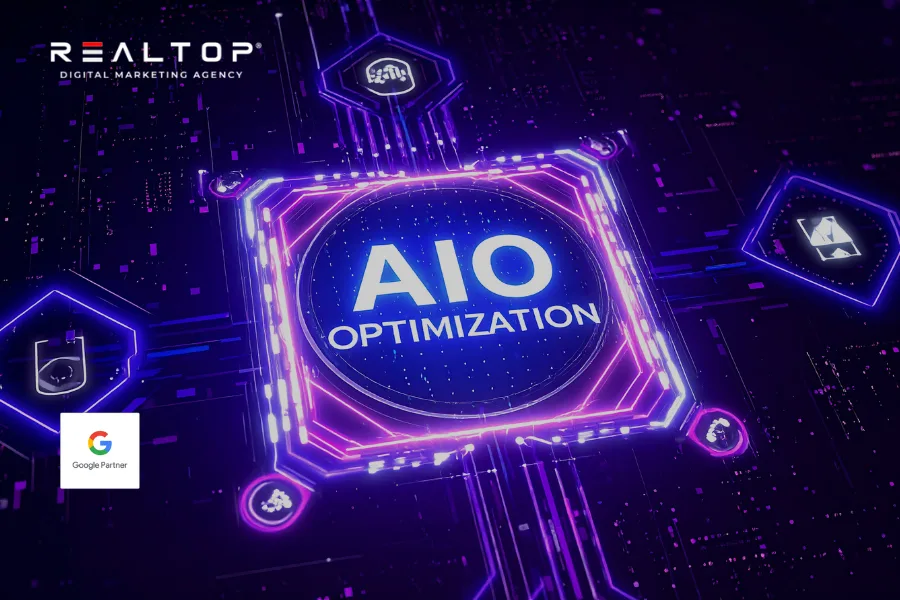
AI Optimization (AIO) is the practice of structuring your website and content so AI-powered search — Google’s AI Overviews, ChatGPT, Gemini, and Perplexity — can read, trust, and recommend your business inside its answers. It is the successor to keyword-only SEO: instead of just ranking a blue link, AIO gets your brand cited in the AI-generated response itself, and increasingly determines both your organic visibility and the cost of your paid ads.
AI is reshaping marketing — and AIO is how you stay visible through it.
Artificial Intelligence Optimization (AIO) isn’t just another acronym. It’s the new foundation for ranking, visibility, and performance across platforms where traditional SEO alone is no longer enough.
From Google’s evolving AI search results to ChatGPT’s incoming ad model, algorithms are prioritizing structure, clarity, and authority in new ways. If your content isn’t aligned with these priorities, it’s already falling behind — and by next year, it may be invisible altogether.
Let’s unpack what AIO really means, how it’s impacting digital marketing right now, and why every business should treat this as an urgent priority — not a “wait and see” trend. If you’d rather skip the theory and see how we implement it, start with our AI optimization services.
Why AIO Matters Now (and Later)
AI is no longer a tool on the side — it’s the filter between you and your audience.
Whether it’s Google’s Search Generative Experience (SGE) or OpenAI’s rollout of paid placements inside ChatGPT, AI is beginning to decide what gets shown and what doesn’t. And while paid spots will exist, visibility still hinges on one thing:
Sites that are:
- Clear in hierarchy (H1s, H2s)
- Rich in schema (FAQ, LocalBusiness, Product, How To)
- Clean in format (no fluff, direct answers, bulleted content)
…are already being favored in AI-generated responses.
That’s AIO — the technical and strategic framework that helps your site “speak machine” in a post-keyword world. Getting the structured-data layer right is a big part of it; see how schema markup helps AI understand your site.
AIO in Action: How It’s Impacting Visibility Today
Already, we’re seeing clear winners and losers in AI-powered search:
- Structured content is being cited in AI snippets, even without backlinks.
- Unstructured sites are disappearing from both organic listings and AI answers.
- Schema-rich content is being used in Google’s SGE and Bing Chat.
The shift isn’t coming — it’s here.
Companies that have adopted AIO early are securing real estate at the top of AI results. Those that haven’t? They’re watching traffic drop without knowing why.
Why AIO Will Shape Future Ad Costs
This isn’t just about organic ranking — it’s about ad performance too. Ads are already appearing inside AI Overviews, and as AI-driven ad platforms emerge, relevance and structure will impact:
- Cost-per-click (CPC)
- Placement priority
- Conversion rate optimization (CRO)
Think of it this way: if your landing pages are hard for AI to parse, your ad quality scores go down — and your costs go up.
Optimizing now doesn’t just future-proof your visibility — it directly affects how much you’ll pay when the AI-driven ad model fully rolls out. If you run paid campaigns, this is the moment to understand how ads work inside AI Overviews and restructure before your competitors do.
AIO Is More Than SEO — It’s a Growth Strategy
Treating AIO as a side project is no longer enough. It should be baked into:
- Website structure and design
- Landing page content
- Local SEO
- Email automations
- Lead gen funnels
The goal is not just to rank — it’s to become the most straightforward, most machine-readable answer across every platform your prospects use. That’s exactly what our AI optimization services are built to do, working alongside your existing SEO and Google Ads.
Want to see where you actually stand?
We’ll run your top queries through ChatGPT, Gemini, and Google’s AI Overviews and show you exactly who’s getting cited instead of you — and what it takes to change that.
Final Word: You Can’t Optimize for the Past and Expect to Win the Future
Businesses that fail to adapt to AIO will pay for it — in higher ad costs, lower search visibility, and slower growth.
At REALTOP, we help brands evolve their content, site structure, and ad strategy to speak directly to the AI systems driving modern search and marketing. Whether you’re in SEO, PPC, or content-heavy industries, the time to start optimizing for AI is now.
Ready to find out where your site stands?
Let us show you what your AIO baseline looks like — and how we can help you get ahead.
Frequently Asked Questions About AIO
SEO focuses on optimizing content for traditional search engines. AIO (Artificial Intelligence Optimization) ensures your content is machine-readable and favored by AI-powered platforms, such as ChatGPT, Google SGE, and Bing Chat.
Not necessarily — but key pages should be updated with proper headings, schema markup, and clearer formatting to start making a difference right away.
AIO affects both. AI-driven ad platforms prioritize structured, relevant content. That means your landing page quality can directly impact your ad costs and visibility.
Schema markup helps AI systems interpret your content more precisely — whether it’s an FAQ block, local address, product spec, or service description. It’s a critical part of machine readability.
A site audit from a team like REALTOP can assess your content’s structure, schema usage, and readiness for AI visibility — then show you exactly what to fix and prioritize.

Explore insights and strategies from Nik, a digital marketing contributor at RealTop. Browse expert articles on SEO, paid ads, AI, and eCommerce trends.